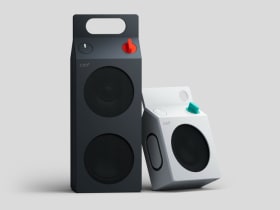

Apple officially unveiled the iPhone Duo at its "Surprise and Shine" event at Apple Park on September 9, 2026. It was new CEO John Ternus's first keynote, and it marks the biggest iPhone design change in nearly 20 years.
In Thailand, pricing starts at 79,900 baht (256GB) and goes up to 127,900 baht for the top 2TB model. It comes in two colors, Star White and Night Sky, with pre-orders opening October 16 at 7:00 PM and sales starting October 23, 2026. It has a 5.4-inch outer screen and a 7.6-inch inner screen, folding open into both phone and tablet modes in one device, and is just 5.2mm thick when unfolded.

▶︎ Why Apple *Really* Waited 10 Years to Make a Foldable Phone — an interview with John Ternus and Joz by Tom's Guide, filmed at Apple Park
Why did it take this long?
Ternus said Apple was willing to wait because it wanted to hit its own bar for durability, quality, and design rather than ship something unfinished. The team also chose to change the screen's proportions instead of going with the square-ish display common on other foldables, so the phone wouldn't be bulky and would feel better to hold.

A screen with (almost) no crease — Apple sandwiches the OLED display between glass on both sides, combined with a complex hinge mechanism, to keep the screen as flat as possible. The frame is polished grade 5 titanium, reinforced internally with a ceramic-fiber structure (3 times tougher than titanium alone), with Ceramic Shield glass on the front and an IP68 water/dust rating.
The flexible display cover also gets a special nano-texture surface, which helps reduce wrinkling, cuts glare, and feels better to the touch.
A reviewer's take
Mark Spoonauer, editor-in-chief of Tom's Guide, who got hands-on time with the device in the interview above, described the screen as breathtaking — the crease is barely visible, and watching Netflix full-screen shows no black bars top or bottom.
Where it still falls short: the same review is upfront that the Duo isn't the thinnest or lightest foldable out there — it still loses to some Android rivals on that front.
A redesigned iOS interface — the iPhone Duo ships with iOS 27, with an interface rebuilt specifically for the fold. Because the folded screen has proportions like a passport booklet, Apple shifted controls and the main menu toward the right side, so they're reachable with your thumb whether the phone is folded or unfolded.

The inner-screen selfie camera (FaceTime camera) is hidden beneath the display — invisible when not in use, and only appearing when it's actually called on. It's a small detail that keeps the screen looking clean.
Apps and Apple Pencil — app developers use the same API (the system that lets apps talk to the device) as on iPad, so apps like Netflix, Slack, and Zoom can genuinely render in a real side-by-side split view, not just a stretched phone layout like what you see on Android foldables. This is also the first iPhone to support Apple Pencil, letting you run 2 apps at once on a single screen.

iPhone 18 Pro and Pro Max
In Thailand, pricing starts at 48,900 baht.

A variable aperture camera — a 6-blade mechanism automatically adjusts the aperture to the light: wider when it's dim, narrower for group shots that need more depth of field. Pro users can also manually set shutter speed, aperture, and focus.

The A20 Pro chip (built on 2-nanometer technology) — up to 40% faster than the previous generation in both graphics and sustained performance, with a vapor-chamber cooling system (a chamber that spreads heat away efficiently) to handle heavy workloads like photo processing and on-device AI.

Read the full in-depth reviews of each model at https://oopslife.me/tech/iphone-duo-review and https://oopslife.me/tech/iphone-18-pro-review